

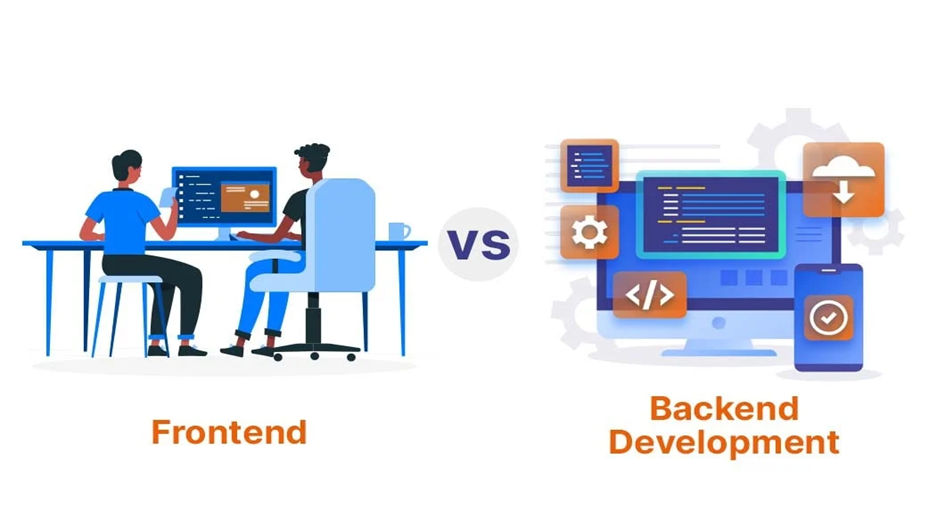
In today’s digital world, interact with web applications constantly—whether we’re ordering food online, booking a vacation, streaming a movie, or just reading an article like this one. But behind every seamless user experience lies a powerful combination of technologies working together in perfect harmony: frontend and backend development. Think of your favorite app or website. But behind the curtain is the backend—the part you don’t see, where all the behind-the-scenes logic, data storage, and server communication take place. The frontend and backend work hand-in-hand to create the full experience you enjoy as a user.
Understanding how these two components operate and communicate is crucial for anyone interested in how the web works—or for those considering a career in tech. This article will break down the differences between frontend and backend roles, explore real-world front-end and back-end examples, review popular Front-end languages and backend languages, and look at development courses, jobs, and salary comparisons.
Whether you’re a tech enthusiast, a career changer, or someone considering enrolling in a frontend and backend development course, this guide will give you a clear picture of how both sides of web development come together to power the modern internet. It’s not just about code—it’s about collaboration, creativity, and building the future of digital interaction.
1. What Is Frontend and Backend Development?
Frontend development (also called client-side development) deals with everything the user sees and interacts with directly: buttons, layouts, colors, animations, forms, and more. It’s what processes your form submission or retrieves your order history. Backend developers work with backend languages like Python, Java, PHP, Ruby, and Node.js. Databases like MySQL or MongoDB store the data that the backend serves to the frontend. Without the frontend, users have no interface. Without the backend, there’s no data or logic behind the interface. Their synergy is what brings web applications to life.
2. An Example of Front-End and Back-End in Operation
Let’s take a real-world front-end and back-end example: online shopping.
Frontend: You open an e-commerce website. You browse products, filter results, view item details, and add something to your cart. All of this is built using HTML for structure, CSS for design, and JavaScript for interactivity
Backend: When you hit “Add to Cart” or “Checkout,” the frontend sends your request to the backend via an API. The backend checks product availability, calculates total cost, applies discounts, and securely processes payment details. This seamless interaction between frontend and backend gives users a smooth, reliable experience while ensuring the system is secure and efficient.
3. Course Pathways for both Backend and Frontend Development
Interested in learning how to build such systems? Some people choose to focus on one side, but many opt to become full-stack developers—capable of handling both ends.
Typical frontend learning paths cover:
- HTML, CSS, JavaScript
- Responsive design
- Frameworks like React or Vue
- Tools like Webpack or Git
Backend paths usually involve:
- A server-side language (Node.js, Python, PHP, etc.)
- Database knowledge (SQL, NoSQL)
- RESTful APIs
- Authentication and security
Platforms like Coursera, freeCodeCamp, and Udemy offer beginner-to-advanced courses. Many of these programs even cover real-world frontend and backend development examples, helping you build a solid portfolio.
4. Career Opportunities: Frontend and Backend Development Jobs
The job market for web developers is thriving. Whether you’re into design-heavy roles or logic-based problem solving, there are frontend & backend development jobs to match your skills.
Frontend developer roles often go to those with a creative eye and a knack for user experience. These jobs involve building responsive, accessible websites and ensuring performance across devices.
Backend developers are more focused on logic, databases, and scalability. These jobs are critical in handling large systems like e-commerce platforms, content management systems, or SaaS products.
Many employers also seek full-stack developers, who can manage both frontend and backend languages tasks. These versatile professionals are especially valued in startups and smaller companies where team sizes are lean.
5. Salaries and Career Outlook
Web development continues to be a lucrative field. Let’s break down the frontend and backend development salary expectations:
- Frontend developers in the U.S. earn an average salary of around $85,000–$110,000 depending on experience, location, and technology stack.
- Backend developers typically command slightly higher salaries due to the complexity and responsibility of their roles—averaging $95,000–$120,000.
- Front-end vs back end salary differences may vary, but backend roles often pay more because they deal with infrastructure, data, and security.
That said, full-stack developers—those with skills in both areas—can earn between $100,000 and $130,000+.
These salaries reflect high demand and a growing need for skilled professionals as more companies move their services online. Whether you’re just starting or looking to pivot careers, the outlook is bright.
In the end, frontend and backend development may seem like two separate worlds, but they are interdependent partners in creating seamless digital experiences. Whether you’re booking a flight, scrolling through social media, or streaming your favorite show, you’re witnessing this partnership in action. From learning a frontend & backend development course, to exploring frontend & backend development jobs, the web development journey is as exciting as it is rewarding. With the right tools, a bit of curiosity, and a desire to build, you can become part of the invisible magic behind every modern web app.